

Hire Cloud Developers—Delivered as a Managed Service for Scalable, Automated Cloud Infrastructure
Don’t just hire a cloud engineer—partner with Stacktrack to build, automate, and manage cloud platforms that accelerate innovation and reduce operational complexity.
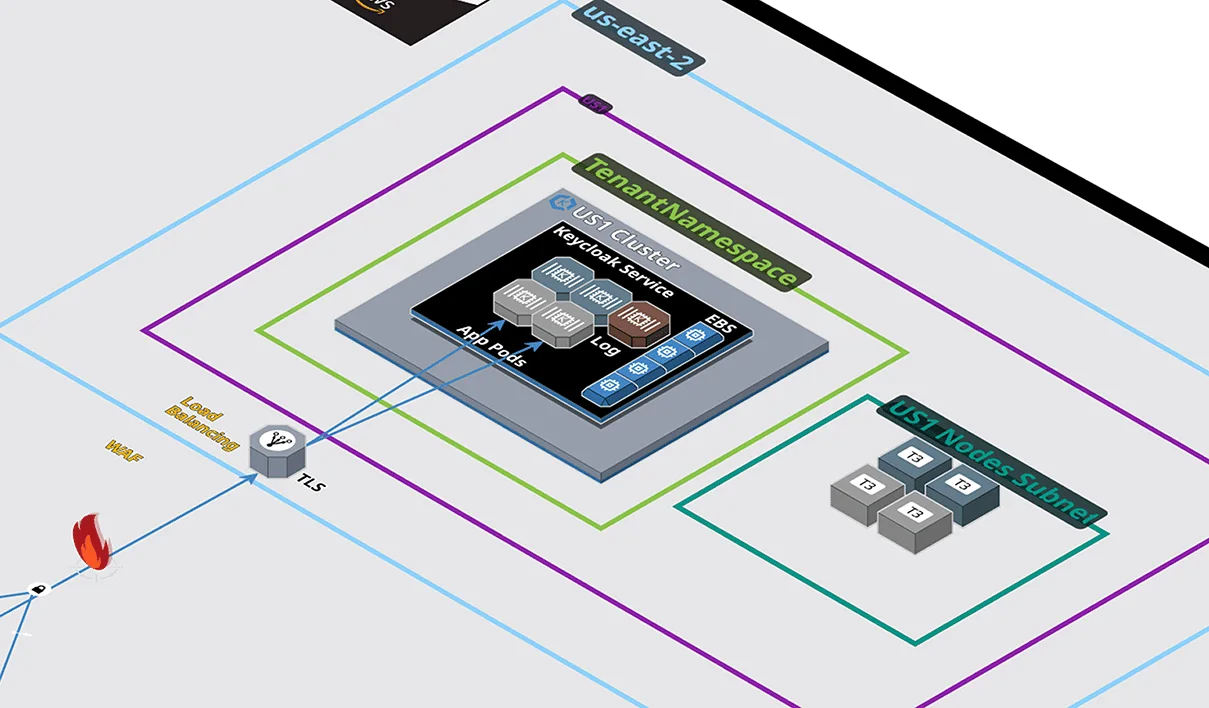
Managed cloud delivery for teams that need reliable platforms, faster releases, and predictable costs.
Hire Cloud Developers
Teams adopt cloud to move faster, but reality can be the opposite: costs creep up, environments sprawl, and delivery slows because the platform needs constant attention. If you’re hiring cloud developers to stabilise and automate your estate, Stacktrack gives you a managed engagement focused on outcomes—not tickets.
We design, build, and run cloud platforms that are repeatable and easy to change: infrastructure as code, automated delivery pipelines, sensible Kubernetes and container setups where they fit, and guardrails for security and governance. The result is fewer manual steps, fewer surprises, and a platform your engineers can trust.
We’ve supported migrations from legacy and on-prem systems, improved reliability with multi-region patterns, and reduced spend through right-sizing and smarter scaling. Tell us what you’re trying to ship, and we’ll map the quickest path from today’s cloud to a platform that helps you deliver.
Recent cloud work
A few common outcomes from managed cloud engagements.







Reduced delivery bottlenecks
Automated provisioning and deployments to remove manual gates.
More resilient architectures
Improved availability patterns and safer change management.
Lower operational load
Fewer ad-hoc fixes through standardisation and runbooks.
Improved cloud spend
Right-sizing, scaling policy, and visibility for engineering teams.
Clearer security posture
Guardrails and monitoring aligned to your risk profile.
What we’ll do as your cloud team
Practical work that gets your platform stable, automated, and ready for growth.
Use case
Cloud platform build & improvement
Design and implement foundations (networking, identity, runtime, observability) with clear standards.
Use case
Cloud migration and modernisation
Move workloads safely, reduce risk, and modernise where it pays off.
Use case
Infrastructure as code
Codify environments so they’re testable, reviewable, and repeatable.
Use case
CI/CD integrated with your platform
Build pipelines that match how you ship and how you operate.
Use case
Security, governance, and cost optimisation
Guardrails, monitoring, and spend controls that don’t block delivery.
What you get
Outcome-focused delivery, with the option of a managed service.
Platform engineering, not firefighting
One team accountable for build, run, and continuous improvement.
Automated, repeatable environments
Versioned infrastructure and golden patterns you can reproduce safely.
Faster releases with less risk
Delivery pipelines that bake in testing, approvals, and rollback paths.
Security and governance by default
Practical controls, policy-as-code where useful, and clear audit trails.
Reliability you can measure
SLO-style thinking, monitoring, and incident learnings that reduce repeat issues.
Cost control with visibility
Spend baselines, quick wins, and scaling strategies that match real usage.
Ways to hire cloud developers
Managed cloud service
Ongoing ownership of platform delivery and operations, with agreed outcomes and regular reviews.
Project delivery
Fixed scope for migrations, platform rebuilds, or CI/CD overhauls with a clear handover.
Embedded specialists
Cloud engineers joining your team for delivery spikes, with Stacktrack backing and standards.
Fractional platform leadershi
Architecture, governance, and delivery direction without hiring a full-time lead.
How it works
Discovery and goals
Current state, constraints, risk, and what “good” looks like.
Plan and quick wins
Prioritised roadmap plus immediate fixes to reduce drag.
Build and automate
Platform changes, IaC, delivery pipelines, and guardrails.
Run with visibility
Monitoring, incident flow, on-call expectations (if needed), and continuous improvement.
Handover or scale
Documentation, enablement, and next-phase planning.
Tooling and cloud platforms
We work with your existing stack and standardise where it helps.
- Clouds
AWS, Azure, Google Cloud
- Infrastructure as code
Terraform, Ansible
- Containers
Kubernetes, Docker
- Serverless
Event-driven patterns and managed runtimes where appropriate
- Delivery
CI/CD pipelines integrated with your repos and change process
Frequently Asked Questions
Cloud Migration Case Study: Kubernetes, Azure API Management, and Zero Trust Modernisation for a Global Insurer
Our customer is a recognised global insurer, operating at scale with complex regulatory, security, and operational requirements. As part of their cloud transformation journey, we were engaged to help modernise their Kubernetes platform and deployment pipelines to support agility, resilience, and future innovation.
Tell us about your project
Customer proof